
The demand for skilled technology professionals has never been stronger, and computer science careers continue to dominate the landscape of high-paying, future-proof opportunities. Whether you're considering your first tech role or planning a career pivot, understanding the breadth of possibilities within computer science helps you make strategic decisions about your professional future. The integration of artificial intelligence into virtually every tech role has transformed traditional career paths, creating unprecedented opportunities for those who combine foundational computer science knowledge with cutting-edge AI capabilities.
The Expanding Landscape of Computer Science Careers
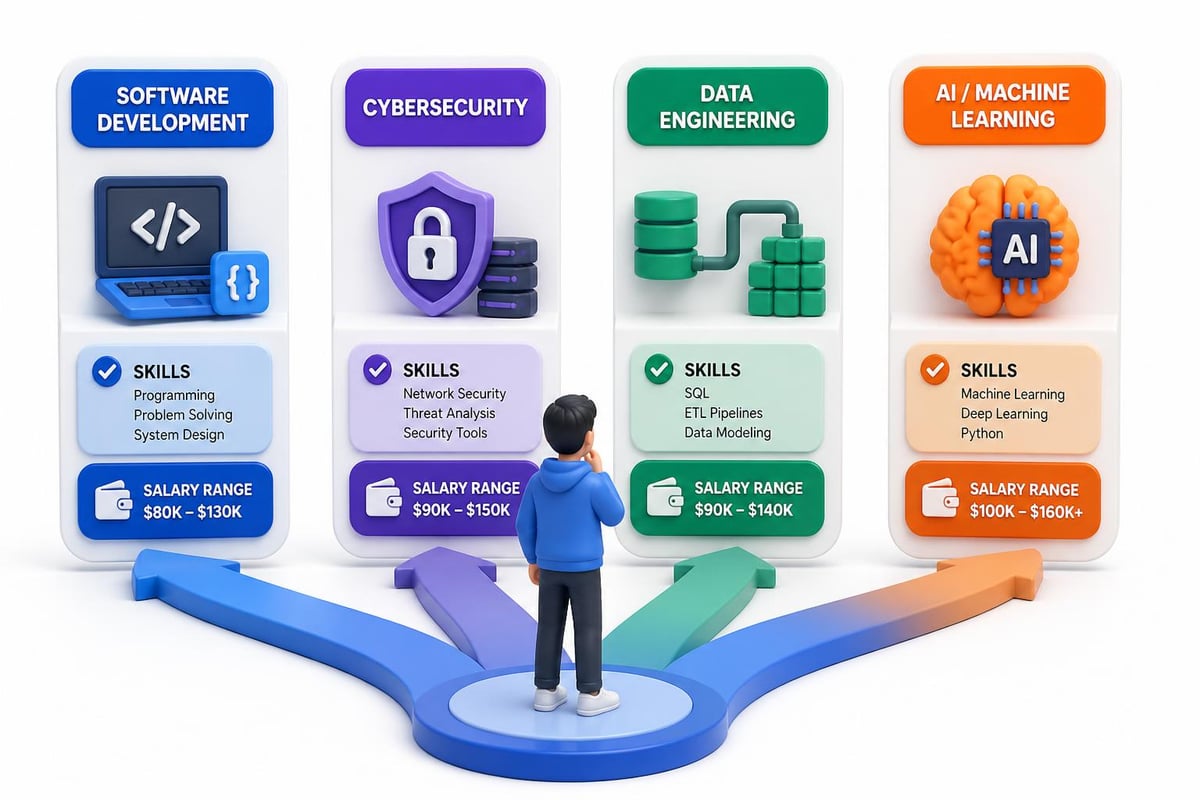
Computer science careers span an incredibly diverse range of specializations, from software development and cybersecurity to artificial intelligence and cloud computing. This versatility makes computer science one of the most adaptable fields for career growth and pivoting.
The modern tech ecosystem rewards professionals who understand both traditional computer science fundamentals and emerging technologies. According to Fortune Education’s analysis of computer science careers, demand continues to outpace supply across multiple specializations, creating a sustained seller's market for qualified candidates.
Traditional vs. AI-Enhanced Roles
Today's computer science landscape divides into traditional roles and AI-enhanced positions that leverage machine learning, automation, and intelligent systems:
Traditional Computer Science Roles:
- Software Developer
- Database Administrator
- Systems Analyst
- Network Engineer
- Web Developer
AI-Enhanced Computer Science Careers:
- Machine Learning Engineer
- AI Research Scientist
- Prompt Engineer
- AI Solutions Architect
- Automation Specialist
The distinction matters because professionals who position themselves at the intersection of computer science fundamentals and AI capabilities command premium salaries and enjoy greater career flexibility. Many traditional roles now require AI literacy, while entirely new positions emerge specifically around artificial intelligence implementation.
High-Demand Roles and Salary Expectations
Understanding which computer science careers offer the strongest compensation helps you prioritize skill development and certification efforts. The salary data for computer science careers reveals significant variations based on specialization, experience level, and geographic location.
| Role | Average Salary (2026) | Growth Outlook | AI Integration Level |
|---|---|---|---|
| Software Engineer | $115,000 – $185,000 | 25% (10-year) | Medium |
| Machine Learning Engineer | $135,000 – $220,000 | 40% (10-year) | High |
| Cloud Solutions Architect | $140,000 – $210,000 | 30% (10-year) | Medium-High |
| Cybersecurity Engineer | $125,000 – $195,000 | 35% (10-year) | Medium |
| Data Scientist | $120,000 – $200,000 | 36% (10-year) | High |
| DevOps Engineer | $110,000 – $175,000 | 27% (10-year) | Medium |
These figures represent base salaries for mid-level professionals in major tech markets. Senior-level positions and those requiring specialized AI expertise command significantly higher compensation packages, often including substantial equity components.
The AI Premium in Computer Science Careers
Professionals who integrate AI capabilities into their computer science skill sets consistently earn 20-40% more than peers in equivalent non-AI roles. This premium reflects both the scarcity of qualified candidates and the transformative business value these professionals deliver.
For instance, a traditional software developer might earn $115,000 annually, while a software developer specializing in AI integration and automation tools typically commands $145,000-$175,000 for similar experience levels. This differential creates a compelling financial incentive to pursue AI-focused training and certifications.
If you're serious about maximizing your earning potential in computer science careers, structured AI training provides the fastest path forward. Mammoth Club provides structured AI training designed to help you build real-world skills and get hired faster, with career-ready certifications that help you stand out to employers and increase your income potential.

Essential Skills for Modern Computer Science Careers
Success in computer science careers requires a strategic combination of foundational knowledge, specialized technical skills, and increasingly, AI competencies. The skill requirements continue evolving as technology advances, making continuous learning non-negotiable.
Foundational Computer Science Skills
These core competencies form the bedrock of virtually all computer science careers:
- Programming Languages: Python, Java, JavaScript, C++, or Go depending on specialization
- Data Structures and Algorithms: Essential for problem-solving and technical interviews
- Database Management: SQL and NoSQL systems for data storage and retrieval
- Version Control: Git and collaborative development workflows
- Operating Systems: Linux, Windows, and macOS administration fundamentals
AI and Automation Skills
The integration of artificial intelligence into computer science careers demands additional capabilities:
- Machine Learning Frameworks: TensorFlow, PyTorch, scikit-learn
- Prompt Engineering: Crafting effective inputs for large language models
- AI API Integration: Implementing GPT-4, Claude, and specialized AI services
- Automation Tools: Zapier, n8n, and custom scripting for workflow optimization
- Data Analytics: Pandas, NumPy, and visualization libraries for insight generation
Career Paths and Specialization Strategies
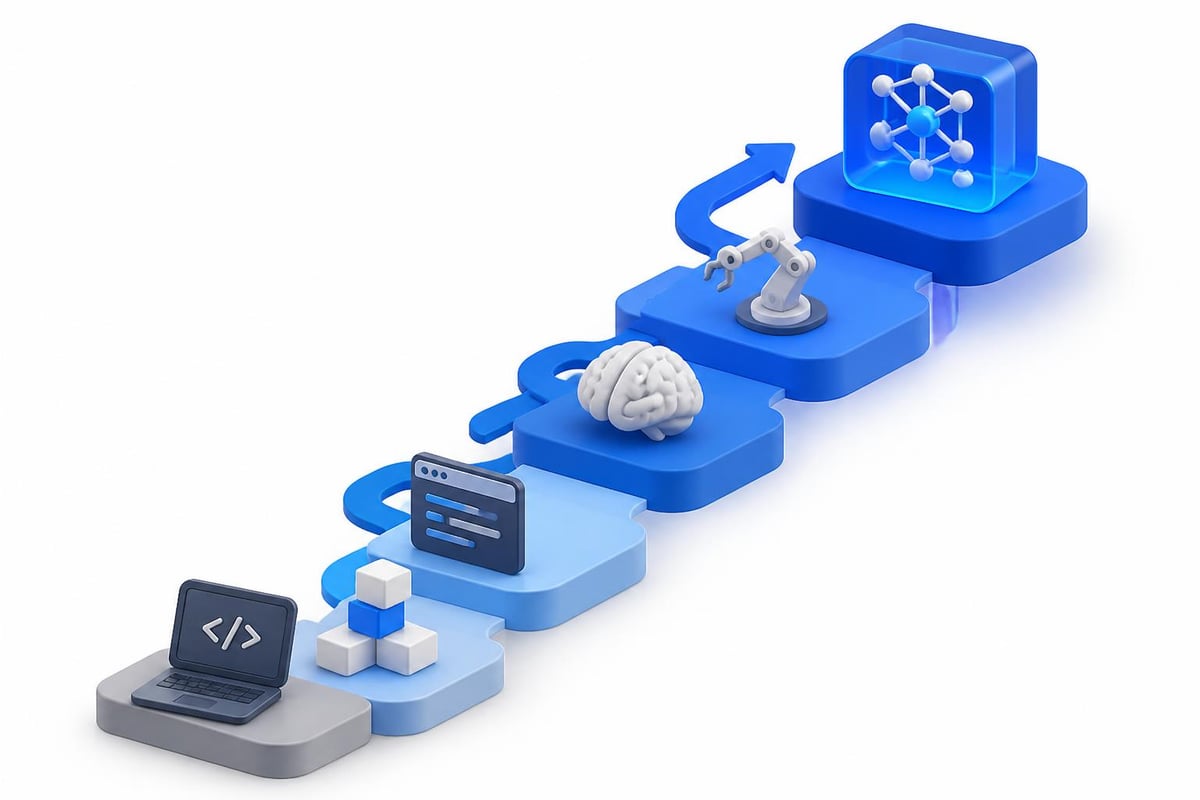
Coursera’s exploration of computer science career paths demonstrates how professionals can strategically navigate from entry-level positions to senior leadership roles through deliberate specialization choices.
The most successful computer science professionals don't simply accumulate years of experience. They strategically build expertise in high-demand areas while maintaining adaptability as technology evolves.
Software Development Track
Software development remains the most common entry point for computer science careers, offering multiple specialization opportunities:
Junior Developer (0-2 years): Focus on mastering one programming language, contributing to codebases, and understanding development workflows. Salary range: $70,000-$95,000.
Mid-Level Developer (3-5 years): Lead feature development, mentor junior developers, and begin specializing in frontend, backend, or full-stack development. Salary range: $95,000-$140,000.
Senior Developer/Architect (6+ years): Design system architecture, make technology decisions, and potentially transition into management or principal engineer roles. Salary range: $140,000-$200,000+.
Adding AI capabilities at any stage accelerates progression and increases compensation. Developers who can implement machine learning models, integrate AI APIs, or build intelligent automation consistently advance faster than peers focused solely on traditional development.
AI and Machine Learning Track
For those entering computer science careers specifically to work with artificial intelligence, the path differs significantly:
- Build foundational programming skills in Python and understand basic algorithms
- Master machine learning fundamentals through structured courses and projects
- Specialize in a domain such as computer vision, natural language processing, or recommendation systems
- Gain practical experience through internships, freelance projects, or contributions to open-source AI initiatives
- Pursue relevant certifications that demonstrate competency to potential employers
This accelerated path can lead to six-figure salaries within 2-3 years for motivated individuals who combine theoretical knowledge with practical implementation skills. The highest paying computer science careers increasingly cluster around AI and machine learning specializations.
Breaking Into Computer Science Careers Without a Traditional Degree
The democratization of technology education has created viable pathways into computer science careers for professionals without traditional four-year computer science degrees. While formal education certainly provides advantages, alternative routes continue gaining employer acceptance.
Alternative Education Pathways
| Pathway | Timeframe | Cost Range | Employer Acceptance |
|---|---|---|---|
| Coding Bootcamp | 3-6 months | $10,000-$20,000 | Moderate-High |
| Self-Directed Learning | 6-18 months | $500-$3,000 | Moderate |
| Online Degree Programs | 2-4 years | $15,000-$50,000 | High |
| Certification Programs | 3-12 months | $2,000-$8,000 | Moderate-High |
| Apprenticeships | 12-24 months | Paid position | High |
The key to success with alternative pathways involves building a compelling portfolio of real projects, earning recognized certifications, and demonstrating practical skills that directly translate to job requirements. Many computer science careers categorized by sector now emphasize demonstrated competency over formal credentials.
Building Your Portfolio
Employers hiring for computer science careers increasingly value portfolios that showcase real-world problem-solving abilities. Your portfolio should include:
- 3-5 substantial projects demonstrating different skills and technologies
- Open-source contributions showing collaborative development abilities
- Technical writing explaining complex concepts or documenting your projects
- AI implementations showcasing your ability to work with modern tools and frameworks
- Case studies detailing problems solved, approaches taken, and results achieved
Strong portfolios compensate for non-traditional educational backgrounds and often prove more persuasive to hiring managers than degrees alone.
Industry Sectors and Specialization Opportunities
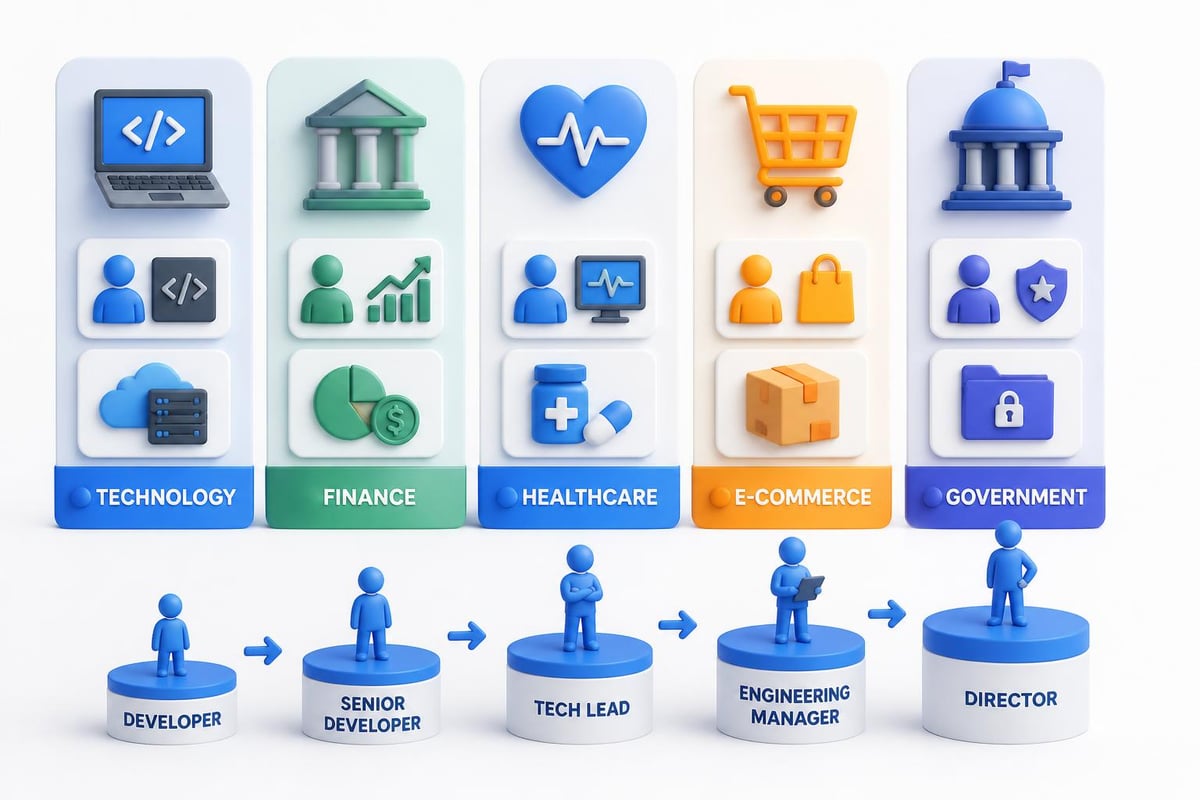
Computer science careers exist across virtually every industry sector, each offering unique challenges, compensation structures, and growth opportunities. Understanding these distinctions helps you align career choices with personal interests and financial goals.
Technology and Software Companies
The most obvious destination for computer science careers, tech companies offer competitive salaries, equity compensation, and exposure to cutting-edge technologies. Companies like Google, Microsoft, Amazon, and thousands of startups compete aggressively for talent.
Advantages: Highest salaries, best benefits, surrounded by top talent, latest technologies
Challenges: Intense competition, demanding work hours, rapid change, potential volatility at startups
Financial Services and Fintech
Banks, investment firms, and financial technology companies employ computer science professionals to build trading platforms, risk management systems, and customer-facing applications.
Advantages: Excellent compensation including bonuses, stable employment, complex technical problems
Challenges: Regulatory constraints, legacy systems, slower technology adoption cycles
Healthcare and Biotech
The intersection of computer science and healthcare creates opportunities in medical imaging, genomics, electronic health records, and drug discovery platforms.
Advantages: Meaningful impact, growing AI integration, stable demand, diverse problems
Challenges: Strict compliance requirements, slower development cycles, specialized domain knowledge needed
E-commerce and Retail
Online retailers and traditional retailers with digital operations need computer science professionals for inventory management, recommendation engines, and customer experience optimization.
Advantages: Direct business impact visibility, fast-paced environment, data-rich problems
Challenges: Seasonal workload variations, tight deadlines, competitive pressure
According to Purdue University’s career resource for computer science majors, sector choice significantly impacts long-term career satisfaction beyond compensation considerations.
The Role of Certifications in Career Advancement
Strategic certifications accelerate progression in computer science careers by validating expertise, filling resume gaps, and demonstrating commitment to continuous learning. Not all certifications carry equal weight with employers, making selection crucial.
High-Value Certifications for 2026
Cloud Platforms:
- AWS Certified Solutions Architect
- Google Cloud Professional Cloud Architect
- Microsoft Azure Solutions Architect Expert
AI and Machine Learning:
- TensorFlow Developer Certificate
- AWS Certified Machine Learning Specialty
- Microsoft Certified: Azure AI Engineer Associate
Cybersecurity:
- Certified Information Systems Security Professional (CISSP)
- Certified Ethical Hacker (CEH)
- CompTIA Security+
Development and DevOps:
- Certified Kubernetes Administrator (CKA)
- HashiCorp Certified: Terraform Associate
- Oracle Certified Professional: Java SE Developer
The return on investment for certifications varies significantly. Cloud and AI certifications typically generate the strongest salary increases, often $10,000-$25,000 annually, while general programming certifications provide more modest gains.
Navigating Career Transitions Into Computer Science
Transitioning into computer science careers from unrelated fields represents a significant but increasingly common career move. Success requires strategic planning, realistic timelines, and focused skill development.
The Transition Timeline
Months 1-3: Foundation Building
- Complete introductory programming courses
- Learn fundamental computer science concepts
- Begin building simple projects
- Join online communities and forums
Months 4-6: Skill Deepening
- Focus on one programming language and framework
- Build portfolio projects
- Contribute to open-source projects
- Start networking with industry professionals
Months 7-9: Specialization and Certification
- Choose a specialization area
- Pursue relevant certifications
- Create advanced portfolio pieces
- Begin applying for entry-level positions
Months 10-12: Job Search and Interview Prep
- Practice technical interviews
- Refine resume and portfolio
- Apply systematically to positions
- Consider contract or internship opportunities
This timeline assumes 15-20 hours weekly of focused learning. Full-time learners can compress the timeline to 4-6 months, while those balancing other commitments might extend it to 18-24 months.
For professionals specifically interested in AI as a career, the transition can be even faster when focusing exclusively on AI tools, frameworks, and practical applications rather than comprehensive computer science fundamentals.
Staying Competitive in Evolving Computer Science Careers
The rapid pace of technological change means computer science careers require continuous learning and adaptation. Professionals who treat education as ongoing rather than finite maintain competitive advantages throughout their careers.
Continuous Learning Strategies
- Dedicate 5-10 hours weekly to learning new technologies, frameworks, or concepts
- Build side projects experimenting with emerging tools and techniques
- Attend conferences and meetups to network and discover industry trends
- Follow thought leaders in your specialization area
- Teach others through blogging, mentoring, or open-source contributions
- Switch contexts periodically to avoid skill stagnation in a single technology stack
The professionals commanding the highest salaries and most interesting opportunities in computer science careers consistently invest in learning. They view skill development not as preparation for a career but as an integral component of the career itself.
The AI Imperative
Regardless of your specific computer science career path, AI literacy has become essential rather than optional. Even roles not explicitly focused on machine learning benefit from understanding how to leverage AI tools for productivity, automation, and problem-solving.
By 2026, employers expect computer science professionals to:
- Understand AI capabilities and limitations for their domain
- Integrate AI APIs and services into applications and workflows
- Evaluate AI solutions for security, ethics, and effectiveness
- Automate routine tasks using AI-powered tools
- Collaborate effectively with AI specialists on cross-functional teams
Professionals who develop these competencies early position themselves advantageously as AI integration accelerates across all technology sectors. Resources like AI Career Central provide structured guidance for building these skills systematically.
Remote Work and Geographic Flexibility
Computer science careers offer exceptional geographic flexibility, with remote work now standard rather than exceptional at many organizations. This shift fundamentally changes compensation dynamics and lifestyle possibilities.
The Remote Work Advantage
Remote computer science positions enable professionals to:
- Access opportunities nationwide or globally without relocating
- Optimize for cost of living by working high-salary positions from lower-cost areas
- Balance lifestyle priorities more effectively than location-dependent careers
- Avoid commute time and redirect hours toward skill development or personal priorities
However, remote work introduces challenges including potential isolation, communication complexities, and heightened competition for positions open to candidates anywhere.
Geographic Salary Variations
| Location Type | Salary Adjustment | Example Role: ML Engineer |
|---|---|---|
| San Francisco Bay Area | Baseline (100%) | $180,000 |
| Seattle, NYC, Boston | 85-95% | $153,000-$171,000 |
| Austin, Denver, Portland | 75-85% | $135,000-$153,000 |
| Remote (Company HQ in Major Market) | 80-100% | $144,000-$180,000 |
| Remote (Company HQ in Secondary Market) | 70-90% | $126,000-$162,000 |
Many organizations now use geographic salary adjustments for remote workers, though policies vary significantly. Negotiating strategies differ for remote positions, often emphasizing the value delivered rather than cost of living in your specific location.
Building Professional Networks
Success in computer science careers correlates strongly with professional network quality. The people you know create opportunities for career advancement, skill development, and business insights unavailable through formal channels alone.
Effective networking strategies for computer science professionals include:
- Contributing to open-source projects to collaborate with developers worldwide
- Attending local meetups and user groups for your primary technologies
- Speaking at conferences or local events to establish expertise
- Maintaining an active LinkedIn presence with thoughtful content sharing
- Engaging in online communities like GitHub, Stack Overflow, or specialized forums
- Building relationships with recruiters specializing in your field
Quality matters far more than quantity in professional networks. A handful of meaningful connections with senior professionals in your specialization proves more valuable than hundreds of superficial LinkedIn connections.
Computer science careers in 2026 offer unprecedented opportunities for motivated professionals willing to continuously develop their skills and embrace emerging technologies, particularly artificial intelligence. The combination of strong foundational knowledge, specialized expertise, and AI capabilities creates the most compelling value proposition for employers. Whether you're starting fresh or transitioning from another field, strategic skill development and focused certification efforts accelerate your path to high-paying roles. AI Career Central provides the step-by-step guidance, practical training, and certification roadmaps you need to break into AI-enhanced computer science careers faster, command higher salaries, and build a future-proof professional foundation in this rapidly evolving field.