
The technology sector continues to dominate salary rankings across industries, and computer science professionals are positioned at the forefront of this financial opportunity. As artificial intelligence transforms traditional development roles and creates entirely new career paths, understanding which positions command premium compensation is essential for anyone planning their tech career trajectory. Whether you're a recent graduate, a career changer, or a professional looking to specialize, knowing the highest paying computer science careers helps you make strategic decisions about education, certifications, and skill development that directly impact your lifetime earnings.
Machine Learning Engineer: Leading AI Implementation
Machine learning engineers consistently rank among the highest paying computer science careers, with median salaries reaching $175,000 to $250,000 at major tech companies. These professionals design, build, and deploy ML models that power everything from recommendation systems to autonomous vehicles.
The role demands expertise in Python, TensorFlow, PyTorch, and advanced mathematics. You'll spend your days training neural networks, optimizing algorithms, and scaling models to handle millions of users. Companies desperately need ML engineers who can translate research papers into production code.
Why Machine Learning Engineers Command Premium Salaries
The compensation reflects genuine scarcity. While thousands of developers learn basic coding, few master the mathematics, statistics, and engineering required for production ML systems. Senior machine learning engineers at FAANG companies regularly exceed $400,000 in total compensation.
The field requires continuous learning. New architectures emerge monthly, and staying current separates top earners from average performers. According to research on highest-paying computer science jobs, ML roles have grown 75% faster than general software positions since 2022.

Principal Software Architect: Designing Enterprise Systems
Principal software architects earn between $180,000 and $300,000 annually, making this one of the highest paying computer science careers for those who excel at system design. These professionals create the technical blueprints that guide entire engineering organizations.
Your responsibilities include:
- Defining microservices architecture across distributed systems
- Establishing coding standards and technical governance
- Evaluating emerging technologies for strategic adoption
- Mentoring senior engineers and conducting architecture reviews
- Ensuring scalability, security, and reliability at enterprise scale
The path to principal architect typically requires 12-15 years of progressive experience. You need deep expertise in cloud platforms (AWS, Azure, GCP), containerization, databases, and security frameworks. Communication skills matter as much as technical depth-you'll present to C-suite executives and translate business requirements into technical specifications.
| Career Level | Years Experience | Typical Salary Range | Key Responsibilities |
|---|---|---|---|
| Software Engineer | 0-3 | $95,000 – $140,000 | Feature development, code reviews |
| Senior Engineer | 4-7 | $150,000 – $200,000 | Technical leadership, architecture input |
| Staff Engineer | 8-11 | $185,000 – $260,000 | Cross-team design, technical strategy |
| Principal Architect | 12+ | $220,000 – $350,000 | Enterprise architecture, strategic planning |
Data Science Director: Bridging Analytics and Business
Data science directors represent the intersection of technical expertise and business leadership, earning $200,000 to $320,000 at major corporations. This role exemplifies how the highest paying computer science careers often require skills beyond pure coding.
You'll manage teams of data scientists and analysts while driving strategic initiatives. Your day involves reviewing predictive models, presenting insights to executives, and aligning data science roadmaps with business objectives. The position demands fluency in statistical modeling, A/B testing, and data visualization alongside management capabilities.
Building Your Path to Data Science Leadership
Start with strong foundations in statistics, SQL, and Python. Progress through individual contributor roles where you solve increasingly complex business problems. Develop your storytelling abilities-executives don't care about your gradient boosting implementation; they care about the $5 million revenue impact your model delivered.
The shortage of qualified data science leaders creates intense competition for talent. Companies now offer equity packages, performance bonuses, and retention bonuses that push total compensation well above base salary. Emerging analyses of computer science career paths show data science leadership roles growing 40% faster than analyst positions.
AI Research Scientist: Advancing Frontier Technologies
AI research scientists at organizations like OpenAI, Google DeepMind, and Meta earn $250,000 to $500,000 in total compensation. These roles push the boundaries of what's possible in artificial intelligence, making them among the absolute highest paying computer science careers available.
Research scientists publish papers, develop novel algorithms, and create breakthroughs that define entire subfields. You need a PhD in computer science, mathematics, or related fields, plus demonstrated research contributions. Your work might involve transformer architectures, reinforcement learning, or multimodal AI systems.
The intellectual challenge attracts many candidates, but few possess the required combination of mathematical rigor and creative problem-solving. Research scientists spend months on single problems, iterating through failed experiments before achieving publishable results. When those results transform industries-as with large language models or diffusion models-the compensation reflects the enormous value created.

Cloud Solutions Architect: Optimizing Infrastructure at Scale
Cloud solutions architects command salaries between $155,000 and $240,000, designing and implementing cloud infrastructure for enterprise clients. As organizations migrate legacy systems to cloud platforms, demand for these specialists has exploded.
Your core responsibilities include:
- Assessing client infrastructure needs and current state
- Designing multi-cloud or hybrid cloud architectures
- Implementing security, compliance, and disaster recovery
- Optimizing costs through right-sizing and automation
- Training client teams on cloud best practices
Certifications significantly impact earning potential. AWS Certified Solutions Architect – Professional, Google Cloud Professional Architect, and Azure Solutions Architect Expert credentials often correlate with $20,000 to $40,000 salary increases. The University at Buffalo research on 2026 salaries confirms cloud architects as consistently top-earning roles.
For professionals looking to transition into specialized AI roles within cloud architecture, structured training programs can accelerate your career progression. The AI Certification Program – Mammoth Club provides hands-on experience with cloud-based AI workflows, automation tools, and deployment strategies that complement traditional cloud certifications and position you for premium AI-adjacent positions.

DevOps Engineering Manager: Automating Software Delivery
DevOps engineering managers earn $170,000 to $280,000 while leading teams that bridge development and operations. This position represents one of the highest paying computer science careers for professionals who understand both code and infrastructure.
You'll manage continuous integration/continuous deployment (CI/CD) pipelines, container orchestration with Kubernetes, and infrastructure-as-code implementations. Leadership responsibilities include hiring DevOps engineers, establishing SRE practices, and reducing deployment cycles from weeks to hours.
Technical Skills That Maximize DevOps Compensation
Master Docker, Kubernetes, Terraform, and Jenkins. Understand monitoring tools like Prometheus, Grafana, and Datadog. Learn at least one cloud platform deeply-multi-cloud knowledge increases your market value substantially.
The business impact of DevOps directly affects compensation. When you reduce deployment time by 80% or decrease infrastructure costs by 40%, executives notice. Quantifying your achievements translates to stronger negotiating positions during performance reviews.
Cybersecurity Architect: Protecting Digital Assets
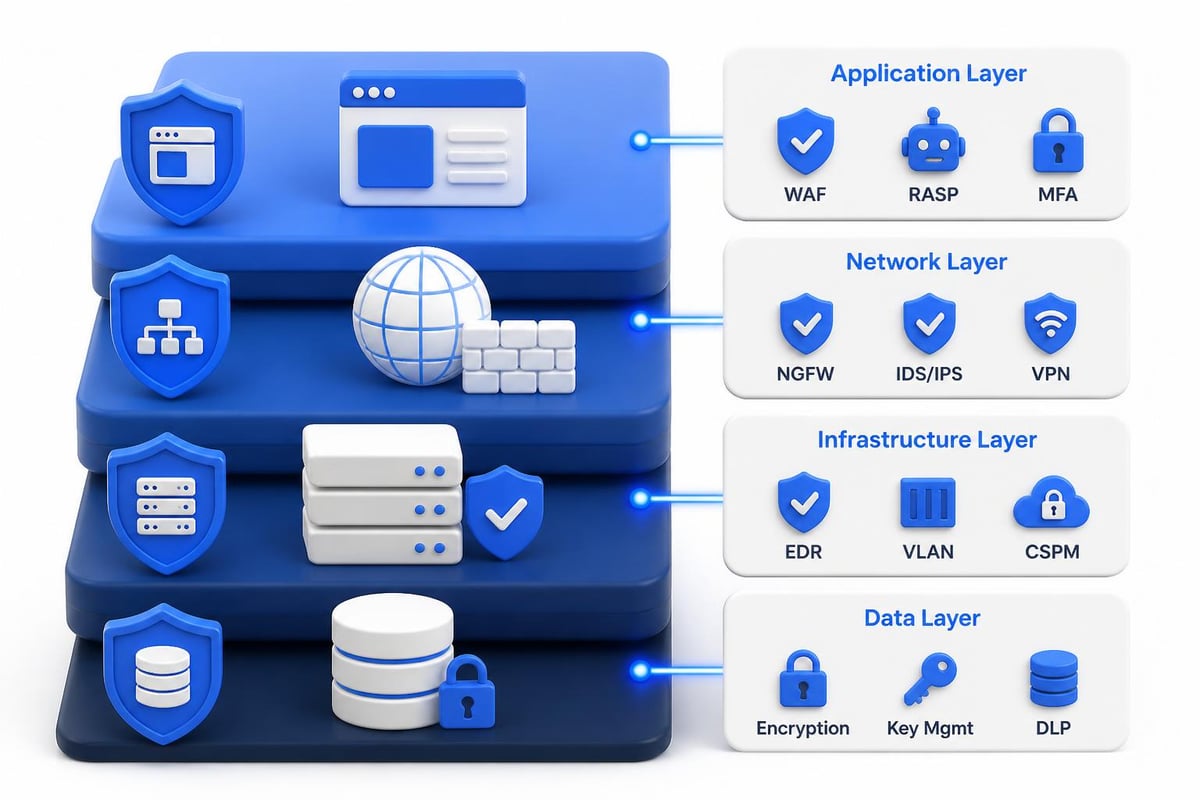
With average salaries ranging from $165,000 to $255,000, cybersecurity architects design comprehensive security frameworks for organizations. The constant evolution of threats ensures this remains one of the highest paying computer science careers with exceptional job security.
Your role encompasses threat modeling, security audits, incident response planning, and compliance management. You'll evaluate emerging threats, implement zero-trust architectures, and establish security protocols across cloud and on-premises systems. Certifications like CISSP, CISM, and OSCP enhance credibility and compensation.
| Specialization | Salary Range | Key Focus Areas | In-Demand Skills |
|---|---|---|---|
| Application Security | $150,000 – $230,000 | Code review, SAST/DAST | OWASP, secure coding, penetration testing |
| Network Security | $145,000 – $220,000 | Firewall, IDS/IPS | Network protocols, encryption, VPN |
| Cloud Security | $160,000 – $250,000 | AWS/Azure/GCP security | IAM, compliance, cloud-native security |
| Security Architecture | $165,000 – $255,000 | Enterprise security design | Risk assessment, frameworks, governance |
The shortage of qualified cybersecurity professionals keeps salaries elevated. Every data breach makes headlines, driving organizations to invest heavily in security talent. Advanced degree pathways in computer science show security specializations commanding 15-25% premiums over general CS roles.
Blockchain Solutions Architect: Building Decentralized Systems
Blockchain solutions architects earn $150,000 to $280,000 designing decentralized applications and cryptocurrency infrastructure. Despite market volatility, enterprise blockchain adoption in supply chain, finance, and healthcare creates sustained demand.
You'll work with Ethereum, Hyperledger, or proprietary blockchain platforms. Smart contract development, consensus mechanisms, and cryptographic protocols form your technical foundation. Beyond coding, you translate business requirements into blockchain implementations and assess whether distributed ledger technology genuinely solves client problems.
The premium compensation reflects specialized knowledge. Few developers understand Byzantine fault tolerance, Merkle trees, and tokenomics deeply enough to architect production systems. Financial services, in particular, pay top dollar for blockchain architects who understand regulatory compliance alongside distributed systems.
Site Reliability Engineer (SRE): Ensuring System Uptime
Site reliability engineers at major tech companies earn $160,000 to $270,000, combining software engineering with operations expertise. Google pioneered the SRE role, and it's now recognized as one of the highest paying computer science careers focused on reliability.
Your primary objectives include:
- Maintaining service level objectives (SLOs) and error budgets
- Automating operational tasks through custom tooling
- Conducting blameless postmortems after incidents
- Capacity planning and performance optimization
- Building monitoring and alerting systems
The role demands strong programming skills-you're not just keeping systems running; you're writing code to eliminate toil. Python and Go are common languages. You'll also master observability platforms, distributed tracing, and chaos engineering principles. When you maintain 99.99% uptime for services handling millions of requests per second, compensation reflects that responsibility.
Full-Stack Development Lead: Owning Product Features
Full-stack development leads managing critical product initiatives earn $145,000 to $225,000. While less specialized than some roles, strong full-stack leaders who deliver business results command impressive compensation packages.
You'll guide teams through React, Node.js, Python, and database technologies while owning feature roadmaps. The ability to context-switch between frontend UX challenges and backend scaling problems makes you invaluable. Product thinking separates great full-stack leads from average ones-you understand user needs, business metrics, and technical constraints simultaneously.
Career advancement often leads to engineering management or principal engineer tracks. Both paths can exceed $300,000 at senior levels, making this a solid foundation for one of the highest paying computer science careers over a complete career arc. Current salary trends across computer science roles show full-stack expertise remains in high demand despite specialization trends.
Quantum Computing Researcher: Exploring Next-Generation Computing
Quantum computing researchers occupy a niche but extremely well-compensated space, earning $180,000 to $450,000 at companies like IBM, Google, and specialized quantum startups. This cutting-edge field represents the frontier of computational science.
Your work involves quantum algorithms, error correction, and hardware-software integration for quantum processors. A PhD in physics, computer science, or mathematics is typically required. You'll collaborate with experimental physicists while developing algorithms that leverage quantum superposition and entanglement.
The field remains small-probably fewer than 5,000 quantum computing professionals worldwide-but investment continues accelerating. When quantum computers solve problems classical computers can't, early-career researchers will become the industry leaders who shaped the field.
Computer Vision Engineer: Teaching Machines to See
Computer vision engineers developing applications in autonomous vehicles, medical imaging, and robotics earn $155,000 to $245,000. As cameras become ubiquitous in devices and infrastructure, visual AI expertise becomes increasingly valuable.
You'll work with convolutional neural networks, object detection frameworks like YOLO and Mask R-CNN, and 3D reconstruction algorithms. Applications range from quality control in manufacturing to diagnostic imaging in healthcare. The interdisciplinary nature-combining optics, geometry, and deep learning-creates barriers to entry that support premium compensation.
Projects might involve training models to identify defects on assembly lines, enabling robots to grasp irregular objects, or segmenting tumors in MRI scans. The tangible impact of computer vision applications makes it easier to demonstrate business value and justify higher salaries.
Natural Language Processing Engineer: Processing Human Language
NLP engineers building chatbots, search engines, and language understanding systems earn $150,000 to $235,000. The explosion of large language models has transformed this field from academic pursuit to critical business function.
Your technical stack includes transformers, attention mechanisms, and frameworks like Hugging Face. You'll fine-tune pretrained models, build evaluation pipelines, and deploy language AI at scale. Understanding linguistics alongside machine learning gives you an edge-you know why certain model architectures work for specific language tasks.
The commercial applications are massive. Customer service automation alone represents billions in potential cost savings. Companies need NLP engineers who can adapt foundation models to domain-specific tasks, optimize inference costs, and ensure outputs meet quality standards. Comprehensive reviews of high-paying tech careers consistently highlight NLP as a growth specialization.
AI Product Manager: Guiding AI Product Strategy
Technical product managers specializing in AI products earn $165,000 to $280,000, bridging engineering teams and business stakeholders. This role requires understanding AI capabilities deeply enough to make sound product decisions without necessarily writing production code.
You'll define product roadmaps for AI features, prioritize model improvements versus new capabilities, and communicate technical limitations to non-technical executives. The best AI product managers have engineering backgrounds-they've built models themselves and understand what's feasible versus what's hype.
Key competencies include:
- Evaluating AI/ML solutions for product-market fit
- Defining success metrics for AI features
- Managing cross-functional teams (engineers, designers, researchers)
- Understanding data requirements and model limitations
- Balancing innovation with practical deployment concerns
The strategic nature of the role commands high compensation. When your product decisions affect millions of users and generate substantial revenue, organizations invest accordingly in top talent.
The technology landscape offers exceptional financial rewards for computer science professionals who combine technical depth with strategic career planning. From machine learning engineers to cybersecurity architects, the highest paying computer science careers share common traits: specialized expertise, demonstrated business impact, and continuous skill development. Whether you're just starting your journey or looking to transition into more lucrative specializations, AI Career Central provides the structured guidance, practical training, and certification pathways you need to accelerate your earning potential and build a sustainable, high-income career in artificial intelligence and related technologies.