
The artificial intelligence job market in 2026 is crowded with generalists competing for the same entry-level positions. Standing out requires more than basic Python knowledge or a generic understanding of machine learning. You need to carve out your own job niche, a specialized area where your skills, interests, and market demand intersect perfectly. This strategic focus transforms you from just another resume in the stack into the exact candidate hiring managers actively seek.
Why Finding Your Job Niche Matters More Than Ever
The AI industry has matured significantly. Companies no longer hire "AI specialists" who know a little about everything. They want experts who solve specific problems.
Your job niche serves as your competitive advantage. When you position yourself as the go-to person for prompt engineering in healthcare, or automation for financial services, you immediately reduce your competition by 80% or more. Recruiters searching for these specific skill combinations will find you instead of scrolling past you.
Consider these compelling benefits:
- Higher salaries: Specialists command 30-50% more than generalists in the same field
- Faster hiring cycles: Companies spend less time evaluating you when you perfectly match their needs
- Greater job security: Specialized expertise is harder to replace or automate
- Clearer career trajectory: Your next steps become obvious when you have a defined niche
The definition of a niche emphasizes finding a position particularly suitable for you. In AI careers, this means identifying where your unique combination of skills creates maximum value.

Evaluate Your Current AI Skills and Knowledge Base
Start your job niche discovery by conducting an honest skills inventory. This foundation determines which specialized paths you can realistically pursue.
Technical Skills Assessment
List every AI-related skill you possess with proficiency ratings:
| Skill Category | Specific Skills | Proficiency Level |
|---|---|---|
| Programming | Python, R, SQL, JavaScript | Rate 1-10 each |
| ML Frameworks | TensorFlow, PyTorch, Scikit-learn | Rate 1-10 each |
| AI Applications | NLP, Computer Vision, Generative AI | Rate 1-10 each |
| Tools & Platforms | Cloud services, MLOps tools, APIs | Rate 1-10 each |
Your strongest skills indicate natural starting points for specialization. If you excel at prompt engineering but struggle with deep learning mathematics, pursuing a job niche in conversational AI makes more sense than computer vision research.
Domain Knowledge Inventory
Technical skills alone don't define your job niche. Domain expertise dramatically increases your value. Ask yourself:
- Which industries do I understand beyond surface level?
- What professional experience do I bring from previous careers?
- Where do my educational background and AI skills intersect?
A former healthcare administrator learning AI can target a job niche in clinical AI automation. Someone with marketing experience might specialize in AI-powered customer segmentation. Combining core abilities with knowledge and values creates powerful differentiation.
Identify High-Demand AI Specializations in 2026
Not all job niches offer equal opportunities. Some specializations face talent shortages while others are oversaturated. Strategic research reveals where demand exceeds supply.
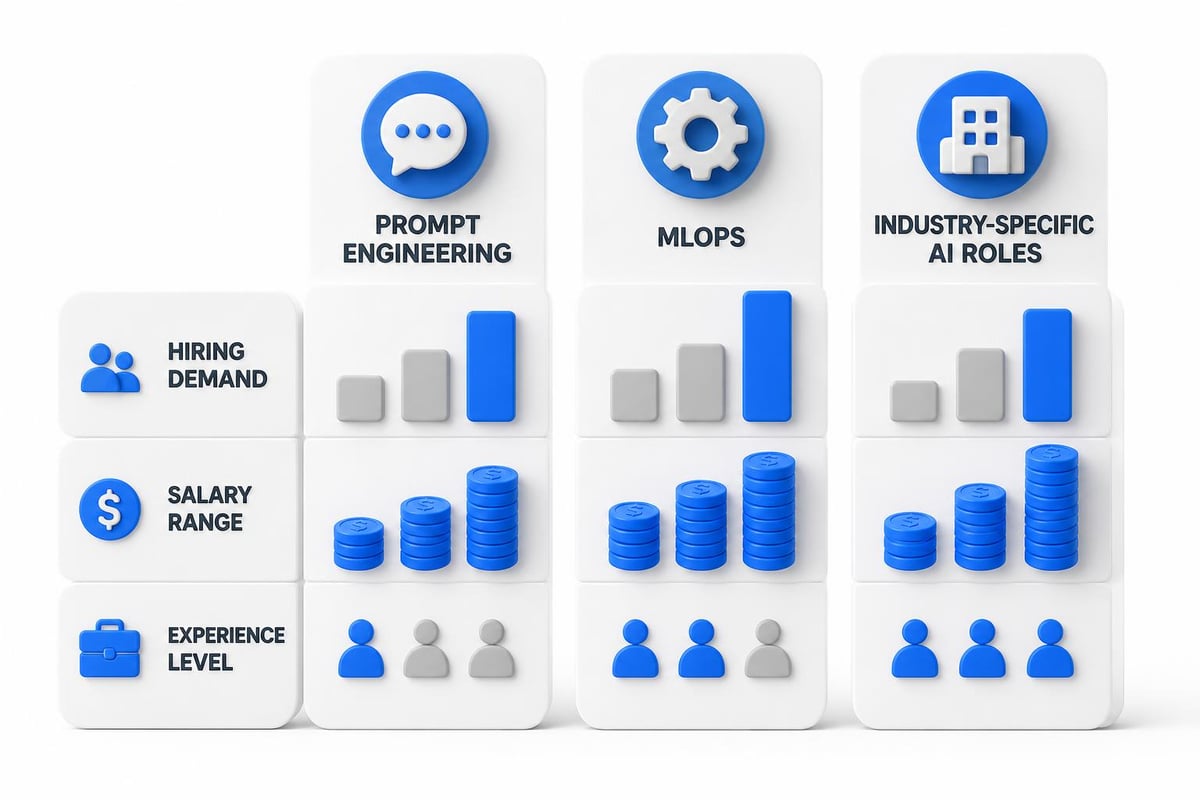
Top high-demand AI niches in 2026:
- Prompt Engineering & LLM Optimization: Businesses need experts who maximize AI tool efficiency
- AI Automation Specialists: Companies want workflow automation that reduces operational costs
- MLOps & Model Deployment: The gap between building models and production deployment remains massive
- Ethical AI & Bias Mitigation: Regulatory requirements drive demand for compliance specialists
- Industry-Specific AI Consultants: Healthcare AI, FinTech AI, Legal AI all need domain experts
Research job boards, LinkedIn postings, and industry reports to validate demand. Tools like Google Trends and Indeed's hiring insights reveal which specializations show consistent growth versus temporary hype.
Market Analysis Exercise
Spend three hours researching your potential job niche:
- Search 50 relevant job postings and identify repeated requirements
- Join three specialized communities and observe recurring pain points
- Interview two professionals already working in this niche
- Read five recent industry reports on specialization trends
This research prevents you from investing months developing expertise nobody wants to hire.
Match Your Strengths to Market Opportunities
The perfect job niche lives at the intersection of what you're good at, what you enjoy, and what the market pays for. Finding this sweet spot requires systematic analysis.
The Niche Validation Framework:
Start by listing 3-5 potential job niches based on your skills inventory. For each one, score these factors from 1-10:
| Niche Option | Skill Match | Interest Level | Market Demand | Income Potential | Total Score |
|---|---|---|---|---|---|
| Example: Healthcare AI Automation | 8 | 9 | 9 | 8 | 34 |
| Option 2 | – | – | – | – | – |
| Option 3 | – | – | – | – | – |
Your highest-scoring option deserves immediate focus. This isn't permanent; your job niche can evolve as you gain experience and market conditions change.
Consider the seven-step process for finding your niche which emphasizes starting with honest self-assessment. In AI careers, this means acknowledging where you excel versus where you merely have basic competency.
Build Specialized Skills That Define Your Niche
Once you've identified your target job niche, strategic skill development separates you from competitors who claim the same specialization.
Create a 90-Day Specialization Plan
Month 1: Foundation Building
- Complete two advanced courses specific to your niche
- Build three small projects demonstrating specialized skills
- Document your learning journey publicly (blog, LinkedIn, GitHub)
Month 2: Practical Application
- Contribute to two open-source projects in your niche
- Solve five real-world problems using your specialized skills
- Network with 10 professionals already working in this area
Month 3: Credibility Development
- Earn one relevant certification that validates your expertise
- Publish two detailed case studies or tutorials
- Present your knowledge through webinars or community talks
For those looking to accelerate this process with structured guidance, Mammoth Club provides specialized AI training designed around real-world workflows and practical projects. The program helps you build portfolio-ready skills faster than self-study alone, with certifications that demonstrate your niche expertise to employers.

Skill Stacking Strategy
Your job niche becomes more defensible when you combine multiple complementary skills. Instead of just "prompt engineer," become "prompt engineer specializing in healthcare compliance and HIPAA-compliant AI implementations."
The formula: Core AI Skill + Industry Domain + Soft Skill = Powerful Niche
Examples:
- MLOps + FinTech + Project Management
- Computer Vision + Retail + UX Design
- NLP + Legal + Technical Writing
This skill stacking approach mirrors how artists find their niche by experimenting, leveraging background, understanding markets, and developing unique styles.
Position Yourself as a Specialist
Having specialized skills means nothing if nobody knows about them. Strategic positioning makes your job niche visible to the right people.
Your Niche Positioning Checklist:
- Update LinkedIn headline to reflect your specific specialization
- Rewrite your summary to address pain points your niche solves
- Showcase 3-5 projects that demonstrate niche expertise
- Join and actively participate in niche-specific communities
- Create content that answers questions only niche specialists can answer
- Use industry-specific keywords throughout your profiles
Your portfolio should tell one clear story. If you're targeting AI automation for e-commerce, every project should reinforce that narrative. Remove generalist projects that dilute your specialized positioning.
Content Creation for Niche Authority
Publish weekly content demonstrating your expertise:
- Technical tutorials: "How I Automated Customer Segmentation Using Claude and Python"
- Case studies: "Reducing Support Tickets 40% with Custom AI Chatbots"
- Industry analysis: "Five AI Automation Opportunities E-commerce Companies Miss"
- Tool comparisons: "Best LLM APIs for Retail Applications in 2026"
This content builds search visibility while proving you understand your job niche deeply. Hiring managers searching for specialists discover your expertise before you even apply.
Test and Refine Your Niche Choice
Your first job niche selection might not be perfect. Smart professionals test their choices before fully committing years of career development.
Validation Methods:
- Freelance projects: Take 2-3 small contracts in your chosen niche to test real-world demand
- Informational interviews: Talk to five people already working in this space
- Job application tests: Apply to 10 positions in your niche and track response rates
- Salary research: Verify that compensation meets your income goals
If you're getting interviews but no offers, your positioning might need refinement. If you're getting no responses at all, reconsider whether sufficient demand exists for your chosen specialization.
Some professionals find success by going even narrower. Instead of "AI in healthcare," they might focus on "AI for radiology workflow optimization." Selecting a focused niche reduces competition and helps you serve specific audiences more effectively.
Navigate Career Transitions Into Your Target Niche
Most professionals can't immediately jump into their ideal job niche. Strategic transitions bridge the gap between your current position and specialized role.
The Stepping Stone Strategy
Current Role → Adjacent Position → Target Niche
If you're currently a general software developer wanting to specialize in MLOps:
- Volunteer to work on ML model deployment in your current role
- Transition to a data engineering position with ML components
- Move into a dedicated MLOps role once you have relevant experience
Each step builds credentials that make the next transition logical to hiring managers.
Leverage Parallel Experience Building
While employed in adjacent roles:
- Contribute to open-source projects in your target niche
- Build side projects demonstrating specialized skills
- Earn certifications that validate your expertise
- Network actively with professionals in your target area
This parallel approach means you're ready when opportunities arise. Many professionals explore careers with no direct experience required by demonstrating practical skills through projects and certifications rather than traditional employment history.
Avoid Common Job Niche Mistakes
Even experienced professionals make critical errors when specializing. Recognize these pitfalls early.
Mistake #1: Choosing Based on Hype Instead of Fit
Every year brings new "hot" AI specializations. Blockchain AI, quantum ML, AGI research-these might generate buzz but offer limited actual job opportunities. Choose your job niche based on sustainable demand and genuine interest, not trending LinkedIn posts.
Mistake #2: Going Too Narrow Too Soon
While specialization helps you stand out, going extremely narrow limits opportunities. "AI prompt engineer for veterinary clinic scheduling software" is probably too specific. "AI automation for healthcare operations" provides focus while maintaining job market size.
Mistake #3: Neglecting Adjacent Skills
Your technical niche needs support from business skills. The best AI specialists also understand:
- Project management and stakeholder communication
- Business ROI and cost-benefit analysis
- Change management and user adoption
- Technical documentation and knowledge transfer
Mistake #4: Staying Static as Markets Evolve
Your job niche should evolve with technology and market demands. The specialist who built their career around TensorFlow 1.x and refused to adapt to newer frameworks finds themselves obsolete. Commit to continuous learning within your specialization.
Forbes outlines a five-step formula for finding your niche that emphasizes evaluating passions and skills to ensure long-term sustainability. Apply this thinking to your AI career to avoid burnout in a specialization you chose purely for money.
Measure Success in Your Chosen Niche
How do you know if your job niche is working? Establish clear metrics that indicate progress.
Quantitative Success Indicators:
- Interview request rate increases by 50%+ within 90 days
- Salary offers exceed your previous compensation by 20-40%
- Recruiters contact you about specialized positions without you applying
- Your niche-related content generates consistent engagement
- You receive 3+ referrals monthly from your professional network
Qualitative Success Indicators:
- You genuinely enjoy deepening expertise in this area
- Conversations with industry peers feel natural and engaging
- You're invited to speak or contribute to niche-specific initiatives
- Problems in this domain fascinate you rather than frustrate you
- Your learning curve remains steep but manageable
If metrics stagnate after six months of focused effort, reassess your approach. Sometimes the issue isn't your niche choice but your positioning, skill development pace, or networking strategy.
Track these metrics in a simple spreadsheet:
| Month | Applications Sent | Interview Requests | Recruiter Contacts | Content Engagement | Skills Added |
|---|---|---|---|---|---|
| Jan 2026 | 15 | 2 | 0 | 150 views | 3 |
| Feb 2026 | 12 | 5 | 1 | 380 views | 2 |
| Mar 2026 | 8 | 6 | 3 | 520 views | 4 |
The trend matters more than absolute numbers. Consistent improvement validates your job niche strategy.
Expand Your Niche Influence Over Time
Once established in your job niche, strategic expansion amplifies your impact and income potential.
Growth Path Options:
- Thought leadership: Publish books, speak at conferences, start podcasts about your specialization
- Consulting: Offer specialized expertise to multiple companies simultaneously
- Training others: Create courses teaching your niche skills to others
- Product development: Build tools or services that solve problems in your niche
- Community building: Start communities around your specialization area
These expansion activities shouldn't dilute your core expertise. They should reinforce your position as the go-to authority in your specific job niche.
Many AI professionals who started by exploring high-paying computer science careers eventually create multiple income streams from their specialized knowledge while maintaining their technical edge.
Finding and developing your job niche transforms your AI career from competing with thousands of generalists to standing out as the specialist companies actively seek. By systematically evaluating your skills, researching market demand, building specialized expertise, and positioning yourself strategically, you create a career path with higher compensation, greater satisfaction, and long-term security. AI Career Central provides the step-by-step guidance, practical training, and certification pathways you need to identify your ideal specialization and build the in-demand skills that get you hired faster in today's competitive AI job market.