
The artificial intelligence revolution isn't slowing down, and neither is the demand for professionals who can harness its power. Right now, companies across every industry are desperately searching for skilled AI practitioners who can build, deploy, and optimize intelligent systems. If you're looking to break into this lucrative field or advance your existing career, understanding the specific skills for AI that employers value most is your competitive advantage. This comprehensive guide breaks down exactly which abilities will land you interviews, secure offers, and accelerate your income in 2026's AI job market.
The Foundation: Core Technical Skills for AI Professionals
Before diving into specialized AI techniques, you need a solid technical foundation. Programming proficiency sits at the absolute top of this list. Python dominates the AI landscape, powering everything from machine learning models to automation scripts. Employers expect you to write clean, efficient code that handles data preprocessing, model training, and deployment pipelines.
Beyond Python, SQL remains critical for querying databases and manipulating the massive datasets that fuel AI systems. JavaScript knowledge helps when you're deploying models to web applications or building user interfaces for AI tools.
Mathematics and Statistics: The Language of AI
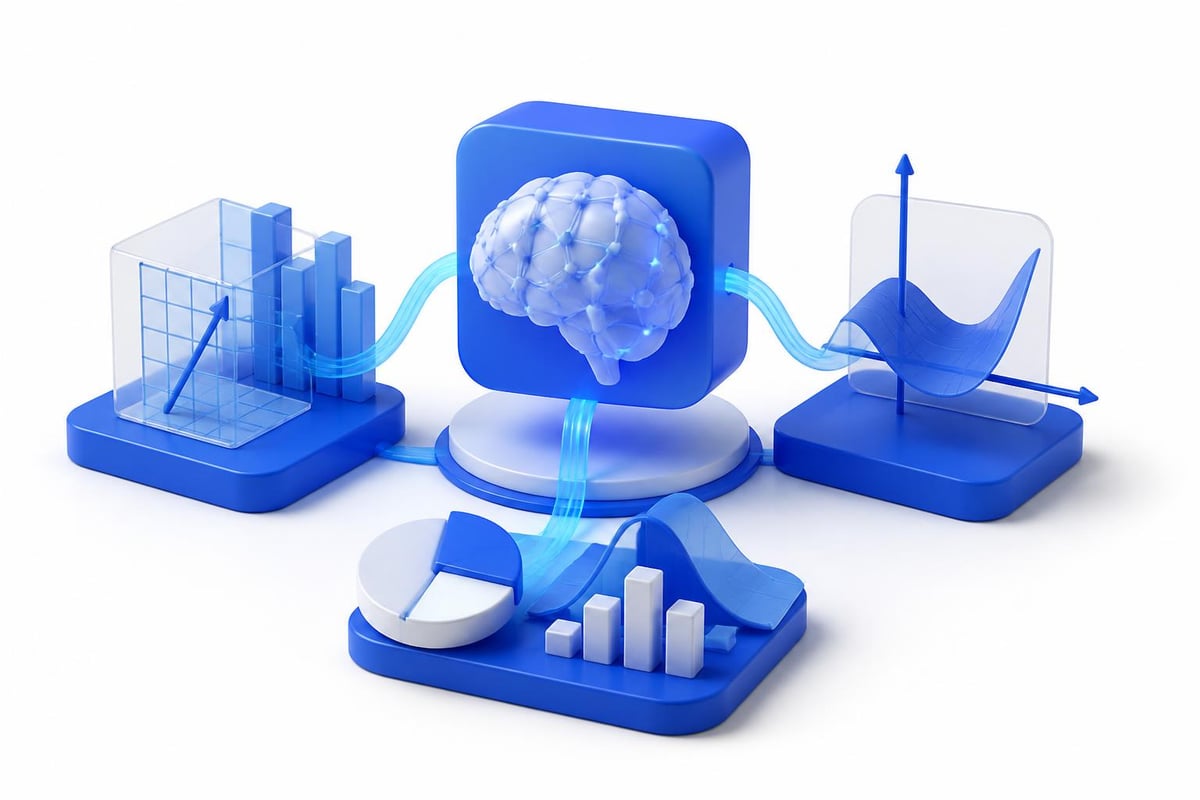
You don't need a PhD in mathematics, but you absolutely need working knowledge of key concepts. Linear algebra helps you understand how neural networks process information through matrix operations. Calculus explains how models optimize themselves during training. Statistics and probability form the backbone of making predictions and measuring model performance.
Here's what you should focus on:
- Linear algebra: Vectors, matrices, transformations
- Calculus: Derivatives, gradients, optimization
- Statistics: Distributions, hypothesis testing, regression
- Probability: Bayes theorem, conditional probability, expected values
These mathematical foundations separate professionals who truly understand AI from those who only know how to run pre-built models. When you're debugging why a model isn't performing well, this knowledge becomes indispensable.
Machine Learning Mastery: Building Intelligent Systems
Machine learning represents the practical application of AI theory. You need hands-on experience with supervised learning algorithms like linear regression, decision trees, and support vector machines. Understanding when to apply classification versus regression, and recognizing which algorithm fits your specific problem, demonstrates real expertise.
Unsupervised learning techniques like clustering and dimensionality reduction help you find patterns in unlabeled data. Companies value professionals who can extract insights from raw information without predefined categories. Principal Component Analysis (PCA) and k-means clustering should be tools you can implement from scratch, not just library functions you call blindly.
Deep learning has transformed what's possible with AI. Convolutional neural networks power computer vision applications, while recurrent neural networks and transformers drive natural language processing breakthroughs. Essential AI skills extend far beyond basic programming into these specialized architectures.
Practical Framework Expertise
Theoretical knowledge means nothing without implementation skills. TensorFlow and PyTorch dominate the deep learning landscape, and you should be comfortable building models in at least one of them. Scikit-learn handles traditional machine learning tasks efficiently, while libraries like Pandas and NumPy manage data manipulation.
| Framework | Primary Use Case | Learning Priority |
|---|---|---|
| PyTorch | Deep learning, research | High |
| TensorFlow | Production deployment, enterprise | High |
| Scikit-learn | Traditional ML algorithms | High |
| Hugging Face | Pre-trained language models | Medium |
| Keras | Rapid prototyping | Medium |
Knowing which tool to choose for each situation shows professional maturity. You wouldn't use a deep learning framework for a simple linear regression problem, just like you wouldn't manually code a transformer when Hugging Face offers battle-tested implementations.
Data Engineering: The Unsung Hero of AI Success
Your models are only as good as your data. Data preprocessing consumes 60-80% of most AI projects, making it one of the most valuable skills for AI professionals. You need expertise in cleaning messy data, handling missing values, detecting outliers, and transforming features into formats that models can digest.
Feature engineering separates average practitioners from exceptional ones. Creating meaningful features from raw data often delivers bigger performance improvements than switching to a fancier algorithm. Understanding domain context, identifying correlations, and engineering informative variables requires both technical skill and creative thinking.
Database management skills become critical as you work with production systems. You'll interact with SQL databases, NoSQL solutions like MongoDB, and data warehouses like Snowflake or BigQuery. Knowing how to efficiently query, update, and manage large-scale datasets keeps your projects moving forward.
Modern AI workflows often involve cloud platforms and big data tools. Familiarity with AWS, Google Cloud, or Azure services for data storage and model deployment expands your capabilities. Tools like Apache Spark handle distributed data processing when datasets exceed what single machines can handle. For those wondering about transitioning into high-paying AI roles, strong data engineering skills consistently correlate with higher salaries.
Emerging Skills for AI: The 2026 Advantage
The AI landscape evolves rapidly, and top essential AI skills for 2026 include several emerging competencies that set you apart from the competition.
Prompt Engineering and Large Language Models
ChatGPT, Claude, and similar models have revolutionized how we interact with AI. Prompt engineering transforms vague instructions into precise commands that generate valuable outputs. This skill bridges technical understanding with practical application, making it incredibly valuable across roles.
You need to understand:
- How to structure prompts for consistent, high-quality responses
- Chain-of-thought reasoning techniques
- Few-shot learning through example demonstrations
- System message optimization for specific use cases
- Prompt iteration and testing methodologies
Companies are building entire product features around LLM capabilities, and professionals who can reliably extract value from these models command premium compensation. This isn't just about writing clever prompts; it's about understanding model limitations, mitigating hallucinations, and integrating LLM outputs into production workflows.
AI Automation and Workflow Integration
Automation represents where AI delivers immediate business value. Organizations want professionals who can identify manual processes and transform them into automated workflows. This requires understanding both the technical implementation and the business context.
You should be comfortable with:
- API integration and orchestration
- Workflow automation tools like Zapier, Make, or custom solutions
- Process analysis and optimization
- ROI calculation and justification
- Change management and user adoption strategies

The Mammoth Club AI Certification Program provides structured training in these practical automation techniques, helping you build portfolio projects that demonstrate real-world value to potential employers.

AI Ethics and Governance
As AI systems make increasingly important decisions, ethical considerations move from philosophical discussions to practical requirements. Understanding bias in training data, fairness metrics, transparency requirements, and regulatory frameworks becomes essential.
Organizations face real legal and reputational risks from poorly designed AI systems. Professionals who can identify potential ethical issues, implement fairness measures, and ensure compliance with emerging regulations bring enormous value. This includes understanding GDPR implications, algorithmic accountability, and responsible AI principles.
Soft Skills: The Multiplier for Technical Expertise
Technical abilities get you through the door, but soft skills determine how far you advance. AI projects rarely succeed in isolation-they require collaboration across teams, clear communication with stakeholders, and strategic thinking about business applications.
Communication skills might seem obvious, but explaining complex AI concepts to non-technical audiences separates senior professionals from junior ones. You need to translate technical jargon into business value, present results convincingly, and advocate for appropriate AI investments.
Critical thinking helps you question assumptions, evaluate model performance objectively, and avoid common pitfalls. The ability to ask "Is this model actually solving the right problem?" or "Are we measuring what matters?" prevents wasted effort on technically impressive but commercially useless projects.
- Problem-solving: Breaking down ambiguous challenges into actionable steps
- Collaboration: Working effectively with data engineers, product managers, and domain experts
- Business acumen: Understanding how AI capabilities map to revenue, cost savings, or competitive advantage
- Adaptability: Learning new tools and techniques as the field evolves
- Project management: Delivering AI initiatives on time and within scope
Specialized Domain Knowledge: Increasing Your Market Value
General AI skills open many doors, but specialized domain expertise dramatically increases your value in specific industries. Healthcare AI requires understanding medical terminology, regulatory requirements like HIPAA, and clinical workflows. Financial AI demands knowledge of risk modeling, fraud detection patterns, and compliance frameworks.
Natural Language Processing specialists need linguistic knowledge beyond programming. Computer vision experts benefit from understanding image processing fundamentals and visual perception. Reinforcement learning practitioners should grasp control theory and decision-making frameworks.
This specialization doesn't mean limiting yourself-it means choosing strategic focus areas where you can command premium rates. Companies pay significantly more for AI professionals who speak their industry's language and understand their unique challenges.
Building Your Skills Portfolio
Theoretical knowledge without practical demonstration won't land you competitive offers. You need a portfolio showcasing real projects that solve actual problems. GitHub repositories with well-documented code, deployed applications that people can interact with, and detailed case studies explaining your approach all demonstrate competence.
Consider these portfolio project categories:
| Project Type | Skills Demonstrated | Employer Appeal |
|---|---|---|
| End-to-end ML pipeline | Data processing, model training, deployment | High |
| Business process automation | Practical application, ROI focus | Very High |
| Open-source contributions | Collaboration, code quality | Medium |
| Kaggle competitions | Algorithm expertise, optimization | Medium |
| Custom tools/applications | Full-stack development, user focus | High |
Each project should tell a story: What problem did you solve? What approach did you take? What results did you achieve? Quantified outcomes resonate powerfully with hiring managers looking for results-driven professionals. If you're exploring computer science careers or considering a pivot into AI, building this portfolio proves your capabilities far better than certifications alone.
Certifications and Credentials That Actually Matter
Certifications don't replace skills, but the right ones validate your expertise and help you stand out in competitive job markets. Employer-recognized credentials demonstrate commitment and provide structured learning paths through complex topics.
Cloud platform certifications from AWS, Google Cloud, or Azure prove you can deploy and manage AI systems at scale. The AWS Certified Machine Learning Specialty or Google Cloud Professional Machine Learning Engineer certifications carry significant weight with employers using those platforms.
Deep learning specializations from reputable institutions provide both knowledge and credibility. However, focus on programs emphasizing practical implementation over pure theory. Certificates that include portfolio projects or capstone work offer the most value.
Industry-specific certifications matter in regulated fields. Healthcare AI work often requires understanding of medical informatics standards. Financial AI might benefit from quantitative finance credentials alongside technical skills.
Staying Current: The Non-Negotiable Requirement
Skills for AI professionals become outdated faster than almost any other field. The frameworks that dominated three years ago have been superseded. The techniques that won Kaggle competitions in 2023 are baseline expectations today. Continuous learning isn't optional-it's the price of admission.
Effective strategies for staying current include:
- Following key research publications and implementing new techniques
- Participating in AI communities on Reddit, Discord, or specialized forums
- Attending conferences, workshops, and webinars
- Experimenting with new tools and frameworks through side projects
- Teaching others through blog posts, tutorials, or mentoring
The professionals who thrive in AI careers treat learning as a core job responsibility, not an occasional activity. They allocate regular time for exploring new developments, questioning their current approaches, and expanding their capabilities. Understanding emerging skills that employers value helps you prioritize which new competencies deserve your limited learning time.
Building Your Learning Roadmap
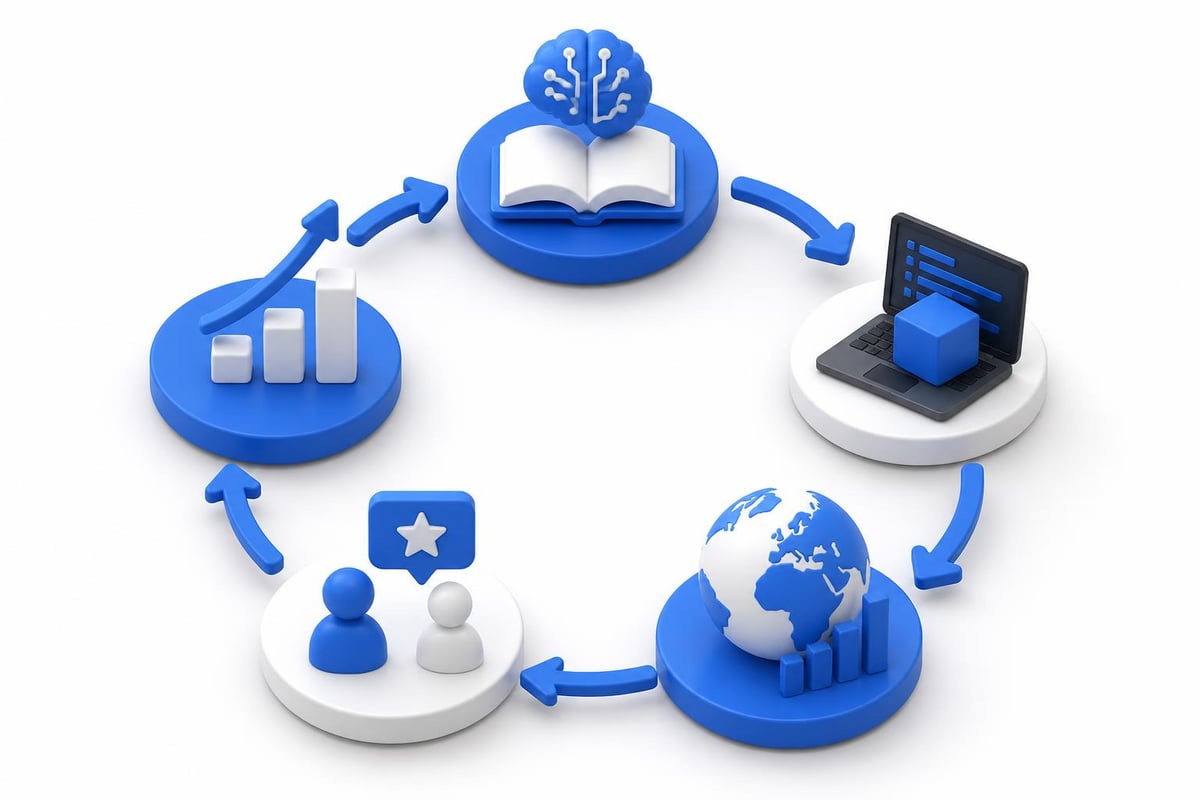
With so many potential skills to develop, you need a strategic approach. Start with foundational programming and mathematics, then build machine learning expertise before diving into specialized areas. This sequential approach prevents overwhelming yourself while ensuring solid fundamentals.
Allocate your learning time based on career goals. If you're targeting machine learning engineer roles, prioritize model development and deployment skills. For AI product manager positions, emphasize business strategy and stakeholder communication alongside technical literacy. Data scientist paths require stronger statistical foundations and exploratory data analysis capabilities.
Track your progress systematically. Maintain a learning journal documenting new concepts, projects completed, and skills acquired. This creates both accountability and a reference for updating your resume as capabilities expand. When you're ready to explore structured career paths in AI, you'll have clear evidence of your development trajectory.
The most successful AI professionals don't just collect skills randomly-they build complementary expertise that creates unique value propositions. Combining prompt engineering with industry knowledge, or pairing automation skills with strong communication abilities, makes you irreplaceable rather than interchangeable.
Mastering skills for AI in 2026 requires dedication, strategic focus, and continuous adaptation to an evolving landscape. The technical foundations, practical tools, emerging competencies, and soft skills outlined here create the complete package employers seek when filling high-paying AI positions. AI Career Central provides the structured guidance, training resources, and career roadmaps you need to systematically build these in-demand capabilities and accelerate your journey into lucrative AI roles. Start developing your AI skill set today and position yourself for the career opportunities that are reshaping our economy.