
Making the right career decisions in 2026 requires strategic thinking, especially when you're aiming for the highest-paying opportunities in technology. The artificial intelligence sector offers unprecedented growth potential, but knowing how to make career progress in this field demands more than just technical interest. You need a clear roadmap, actionable skills, and the confidence to navigate a rapidly evolving job market. Whether you're starting fresh or transitioning from another field, understanding how to build momentum in AI careers separates those who struggle from those who thrive.
Understanding What It Takes to Make Career Progress in AI
The ability to make career advancement in artificial intelligence doesn't happen by accident. It requires deliberate planning and strategic skill acquisition.
Most professionals who successfully transition into AI roles start with a foundation in specific competencies rather than trying to learn everything at once. Focus determines success. When you concentrate your efforts on high-impact skills like prompt engineering, automation workflows, and AI-powered analytics, you position yourself for faster employment and higher starting salaries.
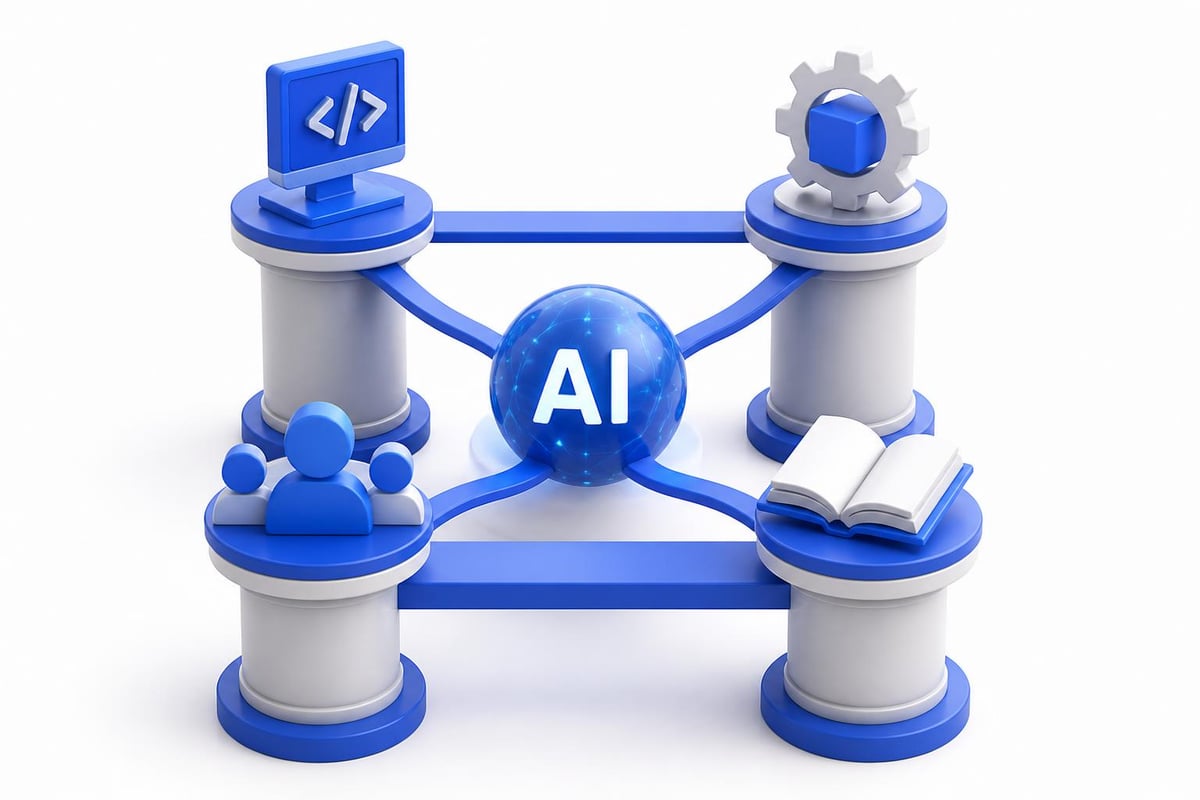
The Four Pillars of AI Career Development
Building a sustainable career in artificial intelligence rests on four fundamental elements:
- Technical proficiency in AI tools and platforms currently used by employers
- Practical application through real-world projects that demonstrate capability
- Strategic networking within AI communities and professional groups
- Continuous learning to stay current with evolving technologies and methodologies
Each pillar supports your ability to make career gains that compound over time. The University of Kentucky's career planning framework emphasizes self-assessment, planning, and action as essential phases, and this applies perfectly to AI career development.
Identifying Your AI Career Path
To effectively make career choices in artificial intelligence, you must first understand the landscape of available roles and their requirements.
| Role Type | Typical Salary Range | Core Skills Required | Entry Barrier |
|---|---|---|---|
| AI Prompt Engineer | $85K-$140K | Language models, optimization, testing | Low-Medium |
| Machine Learning Engineer | $120K-$180K | Python, TensorFlow, model deployment | Medium-High |
| AI Automation Specialist | $90K-$150K | Workflow design, integration, scripting | Low-Medium |
| Data Scientist (AI Focus) | $110K-$170K | Statistics, Python, visualization | Medium-High |
| AI Product Manager | $130K-$200K | Strategy, technical knowledge, communication | Medium |
This variety means you can make career selections based on your current skill level and learning preferences. Not every AI role requires advanced mathematics or years of programming experience.
Matching Your Background to AI Opportunities
Your existing experience holds more value than you might realize. Marketing professionals excel at prompt engineering because they understand audience psychology. Project managers thrive in AI automation roles because they grasp workflow optimization. Analysts transition smoothly into data science because they already think in patterns and insights.
The key is identifying transferable skills and building bridges to AI applications. When you explore various career planning approaches, you'll notice that self-awareness consistently ranks as the starting point for strategic career moves.
Building In-Demand AI Skills That Employers Value
You can't make career progress without acquiring skills that translate directly into job performance. In 2026, employers prioritize practical capability over theoretical knowledge.
Start with tools, not theories. Learn platforms like ChatGPT, Claude, Midjourney, and automation software that companies actually use. Build projects that solve real problems. Create a portfolio demonstrating your ability to improve efficiency, generate insights, or automate repetitive tasks.
The 90-Day AI Skill Acceleration Plan
Here's a proven timeline to make career-ready progress in three months:
Month 1: Foundation Building
- Master one AI language model (ChatGPT or Claude) through daily practice
- Complete 10 prompt engineering exercises focused on business applications
- Document your learning process and early projects
- Join two AI-focused professional communities online
Month 2: Practical Application
- Build three portfolio projects showcasing different AI capabilities
- Learn one automation platform (Zapier, Make, or n8n)
- Study how AI integrates into specific industries that interest you
- Connect with 5-10 AI professionals for informational interviews
Month 3: Career Positioning
- Create a professional portfolio website displaying your AI projects
- Optimize your LinkedIn profile with AI-specific keywords and achievements
- Apply to 15-20 targeted AI positions matching your skill level
- Prepare case studies explaining your project outcomes and methodology
This structured approach helps you make career momentum that's visible to potential employers. The University of Cincinnati’s career development strategies emphasize skill-building and leveraging opportunities, which aligns perfectly with this accelerated timeline.

Leveraging Certification to Make Career Advancement Faster
Certifications provide credibility when you're trying to make career transitions into AI without traditional computer science backgrounds.
Not all certifications deliver equal value. Employers in 2026 look for programs that teach practical, applied skills rather than purely academic theory. They want evidence you can perform job functions from day one.
The Mammoth Club’s AI Certification Program offers structured training designed around real-world AI workflows, automation techniques, and in-demand tools. Programs like this focus on building portfolio-ready projects while you learn, which dramatically shortens your time to employment.

Choosing the Right Certification Path
When evaluating certification programs, prioritize those that include:
- Hands-on projects you can showcase to employers
- Current tools and platforms actively used in 2026 workplaces
- Industry-recognized credentials that appear in job descriptions
- Career support services including resume reviews and interview prep
- Community access for networking and ongoing learning
Making strategic certification choices accelerates your ability to make career progress by months or even years compared to self-study alone.
Creating a Compelling AI Career Portfolio
Your portfolio directly impacts your ability to make career opportunities materialize. It's your proof of competence.
Think beyond simple project listings. Each portfolio piece should tell a story: What problem did you solve? What AI tools did you use? What measurable results did you achieve? How does this demonstrate value to potential employers?
Essential Portfolio Components
| Component | Purpose | What to Include |
|---|---|---|
| Project Showcases | Demonstrate technical skills | Problem statement, solution approach, tools used, outcomes |
| Case Studies | Prove business impact | Context, challenges, your AI solution, quantified results |
| Code Samples | Show implementation ability | Well-commented code, clear documentation, best practices |
| Writing Samples | Display communication skills | Technical explanations, tutorials, thought leadership |
| Testimonials | Build credibility | Client feedback, colleague endorsements, results achieved |
Strong portfolios help you make career conversations more productive because you're showing rather than telling. Recruiters and hiring managers can see exactly what you bring to their organization.
According to resources from the National Career Development Association, effective career planning tools should support self-help exploration, and your portfolio serves precisely this function during job searches.
Networking Strategically in AI Communities
You cannot make career progress alone. The connections you build directly influence the opportunities you access.
In the AI field, networking looks different than traditional industries. Online communities often matter more than local meetups. GitHub contributions can open more doors than golf course conversations. Your ability to help others solve problems frequently leads to job offers.
High-Impact Networking Activities
- Contribute answers in AI-focused forums and communities
- Share your learning journey and projects on LinkedIn and Twitter
- Participate in AI hackathons and collaborative challenges
- Attend virtual conferences and engage in live discussions
- Create content explaining AI concepts or solutions you've discovered
Quality trumps quantity. Building genuine relationships with 20 AI professionals who know your work creates more value than collecting 500 superficial connections.
When you consistently help others and share valuable insights, you make career opportunities come to you instead of constantly chasing them.

Navigating AI Job Applications and Interviews
The ability to make career transitions successful ultimately depends on your job search execution and interview performance.
AI hiring processes in 2026 often include technical assessments, portfolio reviews, and practical problem-solving exercises. Preparation determines outcomes.
Optimizing Your AI Job Search
Start with targeted applications rather than spray-and-pray approaches. Research companies using AI in ways that align with your skills and interests. Customize each application to highlight relevant experience and projects.
Your resume should emphasize results and capabilities over job duties. Instead of "Worked with AI tools," write "Automated customer service workflows using GPT-4 integration, reducing response time by 60% and handling capacity by 200%."
Use keywords from high-paying AI job descriptions to ensure your applications pass automated screening systems while remaining readable for human reviewers.
Acing AI Interview Questions
Technical interviews for AI roles typically combine theoretical knowledge questions with practical problem-solving:
- Conceptual questions: Explain how large language models work, discuss ethical AI considerations, or describe machine learning fundamentals
- Practical scenarios: Design an AI solution for a specific business problem or optimize a workflow using automation
- Portfolio discussions: Walk through your projects, explain decisions, and discuss outcomes
- Cultural fit assessment: Demonstrate learning mindset, collaboration skills, and adaptability
Prepare by practicing explanations of your portfolio projects until you can discuss them conversationally. Anticipate questions about your learning process, how you stay current with AI developments, and examples of overcoming technical challenges.
Resources like Towson University’s career planning services emphasize the importance of preparation and practice in successful job searches, which applies directly to AI career transitions.
Transitioning From Your Current Career Into AI
Many professionals wonder how to make career shifts into AI when they're coming from completely different fields. The answer lies in strategic repositioning.
Your existing expertise becomes your competitive advantage when properly framed. A healthcare professional entering AI doesn't compete with computer science graduates on coding skills; they compete on understanding healthcare workflows, regulations, and user needs that AI solutions must address.
The Career Transition Framework
Phase 1: Skill Bridging (Weeks 1-8)
- Identify where your current expertise intersects with AI applications
- Learn fundamental AI concepts and tools relevant to your industry
- Create one portfolio project combining your domain knowledge with AI capabilities
Phase 2: Credibility Building (Weeks 9-16)
- Obtain relevant AI certifications that complement your experience
- Network with AI professionals in your industry sector
- Document case studies showing how AI could improve processes you understand
Phase 3: Market Positioning (Weeks 17-24)
- Reframe your professional brand around AI-enhanced expertise
- Target roles that need both AI skills and your domain knowledge
- Leverage your existing network to explore AI opportunities
This approach helps you make career transitions smoother by building on strengths rather than starting from scratch. If you're wondering about getting started, exploring careers with no experience needed in AI can provide additional perspective on entry points.
Maximizing Income Growth in AI Careers
Once you've entered the field, you need strategies to make career income increases consistent and substantial.
AI professionals who maximize earning potential focus on three areas: specialized expertise, measurable impact, and strategic positioning.
Develop deep expertise in high-value niches rather than remaining a generalist. Companies pay premium rates for specialists who solve specific, valuable problems. An AI automation expert focused on financial services workflows commands higher rates than a general automation consultant.
Salary Negotiation Strategies for AI Roles
| Strategy | Implementation | Expected Impact |
|---|---|---|
| Quantify Your Value | Document efficiency gains, cost savings, revenue increases from your AI work | 10-20% higher offers |
| Research Market Rates | Use multiple salary sources, adjust for location and experience | Informed negotiation position |
| Highlight Rare Skills | Emphasize combinations of technical and domain expertise | 15-30% premium potential |
| Demonstrate Demand | Mention other opportunities or interest (tactfully) | Improved offer terms |
| Negotiate Beyond Salary | Consider equity, learning budgets, flexibility, project choice | Overall compensation boost |
Understanding artificial intelligence pay trends and benchmarks gives you confidence during these conversations.
Remember that your first AI role sets a baseline for future earnings. Negotiating effectively from the start compounds over your entire career trajectory.
Staying Competitive in an Evolving AI Landscape
The ability to make career longevity in AI requires continuous adaptation. Technologies that dominate today may be obsolete within 18-24 months.
Develop a learning system rather than occasional study habits. Dedicate specific time weekly to exploring new AI tools, reading research developments, and experimenting with emerging capabilities. This isn't optional for career success; it's fundamental to remaining employable.
Building Your AI Learning Ecosystem
Create sustainable learning rhythms that fit your schedule:
- Daily: 15-30 minutes testing AI tools or reading industry news
- Weekly: 2-3 hours on structured learning or project work
- Monthly: Attend one webinar, conference, or community event
- Quarterly: Assess skill gaps and adjust your learning focus
Tools like Feedly, Pocket, and YouTube can help you curate quality AI content without information overload. Follow thought leaders who explain developments in practical, accessible terms.
The Los Angeles Public Library’s career guidance resources remind us that lifelong learning forms the foundation of sustainable career success, which is especially true in rapidly advancing fields like artificial intelligence.
Making Your Next Career Move Count
Whether you're entering AI for the first time or advancing within the field, your next move should be strategic and deliberate.
Stop waiting for the perfect moment or complete preparation. You'll never feel fully ready. The professionals who make career success happen are those who take informed action despite uncertainty.
Start with one focused skill this week. Build one small project this month. Apply to one stretch opportunity this quarter. Consistent, strategic action compounds into transformational career results.
Review your current situation honestly. Where are you today? Where do you want to be in 12 months? What specific skills, certifications, or connections would bridge that gap? Then create a simple action plan addressing those needs.
Resources from Utah Valley University’s career planning services emphasize that self-discovery and personalized planning are essential to meaningful career development. This same principle applies whether you're exploring majors or navigating AI career options.
The AI career landscape in 2026 offers extraordinary opportunities for those willing to invest in strategic skill development and persistent execution. Your background doesn't determine your potential. Your actions over the next 90 days will shape your trajectory far more than your resume from the past decade.
Taking strategic steps to make career progress in artificial intelligence transforms your earning potential and professional satisfaction. The combination of high-demand skills, practical project experience, and strategic positioning creates opportunities that simply didn't exist in traditional career paths. AI Career Central provides the step-by-step guidance, skill training, and certification pathways you need to transition into high-paying AI roles faster. Start building your AI career today with resources designed specifically to help you get hired, increase income, and stay competitive in 2026's most exciting field.